
What We Teach
Arthur Murray Dance Studios
Dancing Made Simple
Arthur Murray teaches a wide variety of dances, from elegant ballroom styles to fun, high-energy social favorites. Most students don’t start by choosing a dance. They start by choosing a goal and we guide them from there.
Get Started Now

Ballroom & Smooth Dances
Viennese Waltz
Viennese Waltz music has inspired people to dance for generations. The most romantic of all the ballroom styles, the Viennese Waltz originated in Vienna, Austria. It’s fast, whirling movements make it the picture of elegance as dancers move gracefully across the floor. While commonly danced in competition to the music style of Johann Strauss, some of the most famous love ballads such as Whitney Houston’s “I Have Nothing” are Viennese Waltzes.
History:
The Waltz developed in Central Europe from the Austrian dance known as the Landler. The fast whirling of partners held as if in an embrace shocked polite society. The music of Johann Strauss and the famous ballrooms of Vienna popularized the faster version known as the Viennese Waltz.
Music:
Viennese Waltz is basically Waltz music played at a much quicker tempo. While slow Waltz is played at 28–36 measures per minute (MPM), Viennese Waltz is played at 50–60 MPM. It is usually played in 3/4 time, but some Viennese Waltz’s are written in 6/8 time.
Characteristics:
Sweeping turns that gracefully move around the floor characterize this dance. The Viennese Waltz is known for its rotational movement, which is simple and elegant.
Fox Trot
Danced most commonly to Jazz standards and Big Band music, the Foxtrot is a great dance for beginners. Its moderate pace allows for easy conversation and a great social dance for weddings and cruises. Notable artists include Frank Sinatra, Harry Connick Jr., and Michael Bublé.
The Fox Trot provides a good foundation for all dances and was often called the “get-acquainted” or “first impression” dance.
History:
In 1913, Harry Fox a vaudeville comedian, introduced a trot to a ragtime song in the 1913 Ziegfeld Follies that pushed other trots into the background. It became America’s most popular dance and remains so to this day as the standard of social dances.
Music:
Fox Trot music is written in 2/4 or 4/4 time. The first and third beats are accented in 4/4 time. The range of Fox Trot tempos makes it possible to consider Foxtrot as though it were three dances: Slow Fox Trot; Medium Fox Trot; and Fast Fox Trot, also called Society Tempo. Fox Trot has two major teaching rhythms: Magic Rhythm–Slow, Slow, Quick, Quick (SSQQ) and Box Rhythm–Slow, Quick, Quick (SQQ).
Characteristics:
The basic components of Fox Trot are walking steps and side steps. Crowded dance floors or night club conditions require that all three tempos be expressed with short steps. In larger ballrooms the slow Fox Trot is characterized by longer smooth, gliding steps, demanding ease of movement and control in order to give this dance an unhurried appearance.
Waltz
Waltz is a timeless dance featuring the classic “box” step. Danced to music in ¾ time, the Waltz is an elegant dance to enjoy at any occasion. Famous Waltz songs include Journey’s “Open Arms” and Norah Jones’ “Come Away With Me”.
The elegant sweeping movement of the Waltz gives dancers a chance to practice balance and move lightly with ease.
History:
Considered the mother of present day dances, the Waltz began in southern Germany in the 17th century. The popularity of the Waltz grew with the music of Johann Strauss and eventually blossomed in the 20th century. It is the basis for many dances and is popular today all over the world.
Music:
The Waltz is written in 3/4 time and has a slow to medium tempo with the musical accent occurring on the first beat of each measure. The basic count for Waltz is 1, 2, 3. Faster tempo Waltz is called Viennese Waltz.
Characteristics:
The basic components of Waltz are walking steps and side steps. Rise and Fall and Body Sway are some of the styling characteristics which make the simplest Waltz patterns elegant and beautiful.
Tango
The Tango is one of the most beautiful of all the dances. It is characterized by earthy and dramatic movements.
History:
The Tango began in the West Indies and found its way to Argentina where it was stylized by the Gauchos. It became the rage in 1921 after the silent screen star Rudolph Valentino brought this romantic dance to millions in “The Four Horsemen of the Apocalypse.” More recently, it has been danced in movies such as “True Lies” and “Scent of a Woman.” Today, the Tango is considered the “dancer’s dance” and becomes a favorite of all who learn it.
Music:
Tango music is usually written in 2/4 or 4/4 timing. The first teaching rhythm in Tango is slow, slow, quick, quick, slow.
Characteristics:
The hold in Tango is more compact than in other moving dances. The walk in Tango differs from walks in other dances in that it is a staccato action obtained by delaying the follow through of the free leg and foot.

Latin & Rhythm Dances
Samba
Made famous by Carmen Miranda, the Samba is often referred to as the “Brazilian Waltz”. This fun, upbeat dance is excellent exercise. It’s great for tightening up the core and learning different rhythms. Famous Sambas include Sergio Mendes “Magalenha” and Madonna’s “La Isla Bonita”.
Sometimes called the South American Waltz, the Samba pulsates to a unique Latin rhythm.
History:
This national dance of Brazil became the rage of its society in the 1930’s, but began as an exhibition dance in Paris in 1905. Movie star and singer Carmen Miranda is credited with making the dance popular in the U.S. in the early 1940’s.
Music:
Today’s Samba music is influenced by Jazz and Latin rhythms. It is written in 2/4 or 4/4 time. The music is festive and fast paced with a sound associated with Rio’s Carnival. The basic count is “Slow a Slow” or “1 & 2.”
Characteristics:
Walking steps and side steps are the basic components of Samba. The major characteristic of the Samba is the vertical bounce action. Steps are taken using the ball of the foot. Knee action along with body sway and “pendulum motion,” in the accomplished dancer, is made to look effortless and carefree.
Bolero
The romantic Bolero is the slowest of the Latin dances. It combines controlled movement with dramatic expression of the music. Slower than the rumba, Bolero is a very smooth, sophisticated dance. It teaches good balance, strong leg lines, and a great attention to your partner. Perhaps the most intimate of the latin dances, Bolero is a great challenge for taking your dancing to the next level. Popular Bolero songs include Celine Dion’s “Falling Into You” and Paul Carrack’s “Satisfy My Soul”.
History:
The Bolero has the same Afro-Cuban roots as the Rumba and is thought to have originated from Cuban or Spanish folk dances such as Danzon and Beguine.
Music:
The Bolero is usually played in 4/4 time and its tempo is slower than of the Rumba. While Rumba music is very rhythmical, the lyrical Bolero sounds more like a Latin Ballad.
Characteristics:
The Bolero has some different characteristics from its Cuban relative the Rumba. Its long sweeping side steps and use of rise and fall create a softness that makes this dance unique among the Rhythm dances. The expanding and contracting dance position makes a very dramatic and romantic statement.
Mambo
The foundation of Salsa and Cha Cha, the Mambo remains a popular Latin dance for those who love a challenge. This dance had its beginnings in the 1940s when American Jazz and Afro-cuban beats combined. The mambo is seen in famous films such as ‘Dirty Dancing’ and ‘West Side Story’.
The wild exciting music and rhythmical body movements make the earthy Mambo irresistible.
History:
In the 1940’s Americans became fascinated by Latin American rhythms. The original Mambo music, El Guardia Con El Tolete, had its beginning in 1944 as a Rumba with a riff improvisation. The Mambo combined American Jazz with the Afro-Cuban beat. Arthur Murray Studios became famous for turning out some of the best Mambo dancers of the era. As the parent of Cha Cha and Salsa, the Mambo is an exciting challenge for all dancers.
Music:
Mambo music is written in 4/4 time with each measure divided into four beats with the important musical accents occurring on the first and third beats. This dance can be done over a wide range of tempos.
Characteristics:
The components of Mambo are rock steps and side steps and foot styling includes points, kicks or flicks. The Latin hip movement in Mambo is an important aspect of the dance. The overall flavor of the dance is contained in the translation of the word Mambo which means “shake it” or “say it.”
Bachata
This dance, originally from the Dominican Republic, has swept its way through the world and is often viewed in Salsa clubs as the “slow dance”. Although most commonly danced to artists like Aventura and Prince Royce, the Bachata is a great party dance that can also be done to most Top 40 and Rock ‘n Roll music.
History:
The Bachata originated in the countryside of the Dominican Republic. The dance is a direct reflection of the music being played in the night clubs during the 1960’s. The Bachata has close ties to the Cuban Bolero.
Music:
The music of Bachata is the root of the dance. The tempo is slow, approximately 120 beats per minute, and is played in 4/4. Bachata music can be referred to as Latin “blues” music. It usually tells the tale of sadness in love and is the most romantic genre of guitar music this century.
Characteristics:
The Bachata has very basic and simple footwork that moves in a side to side or forward to back motion. The romantic character of the Bachata is achieved from the sensual hip and body actions. Good use of the knees helps produce the desired hip movement.
Rumba
The Rumba will sharpen your sense of rhythm, timing and muscular control.
History:
The Rumba was at the beginning of the Cuban and Latin American dance crazes. Danced to music inspired by African rhythms and Spanish melodies, the Americanized Rumba was the basis for the Mambo and Cha Cha in the United States. Rumba rhythms have found their way into Country Western, Blues, Rock & Roll and other popular forms of music.
Music:
Rumba music is usually written in 4/4 time and may be played over a wide variety of tempos. Often in rumba music there may be an underlying pulsation of & 1 & 2 & 3 & 4. The basic step in Rumba is counted Slow, Quick, Quick (SQQ). Examples of Rumba songs include “Besame Mucho” and “Can’t Take My Eyes Off Of You”.
Characteristics:
The distinctive hip movement of Rumba, called the Cuban Motion, is one of the most important elements of this dance. Introduced in the Rumba, it is an important styling element in a number of popular Latin American dances.
Cha Cha
This fun, carefree dance is still one of the most popular Latin dances today. With its characteristic “two-three cha-cha-cha” rhythm, the Cha Cha can be danced to a variety of music from Santana to Michael Jackson and everything in between.
The energetic rhythm of the Cha Cha encourages you to cut loose and let your personality show.
History:
One of the most popular Latin dances in the U.S., the Cha Cha began as a variation of the Mambo called Triple Mambo. It was so easy and so much fun, it became the rage of the early 1950’s. Its infectious one-two, one-two-three, rhythm demands that sitters become dancers. Everybody can learn the Cha Cha.
Music:
Cha Cha music is written in 4/4 time and may be played over a wide range of tempos. Often in Cha Cha music, a rhythmical link can be heard between each measure resulting in an overall rhythm of 1, 2, 3, 4 & repeated over and over.
Characteristics:
Triple steps (Chasse) and rock steps are the basic components of the Cha Cha. Since the Cha Cha is derived from the Rumba and Mambo, Cuban Motion is an important aspect of this dance.
Merengue
The ultimate party dance, Merengue was said to be invented in the Domincan Republic by General Maringie, who returned from war and danced on an injured leg. Today’s exciting rhythm of the Merengue inspires dancers all over the world to move to its intoxicating beat.The Merengue is a latin dance that can be picked up quickly and is great for popular songs with a strong consistent beat such as Pitbull’s “Fireball” and Elvis Crespo’s “Suavemente”.
Merengue is the simplest dance to learn. Its uncomplicated timing makes it easy to feel the music.
Music:
Merengue music is written in 2/4, 4/4 or 6/8 time. The rhythmical accent will occur on the first beat of each measure.
Characteristics:
Walking steps and side steps (chasse) are the basic components of Merengue. This dance is introduced as a marching dance but can be developed into a very rhythmical dance. With “Cuban Motion” and animated body movement, the Merengue gives a festive party appeal.
Salsa
Known for its fast-paced tempo and spins, this quintessential Latin dance is often seen at clubs, family parties, and anytime there is Latin music. As Salsa differs in style across the world (i.e., LA style, Mambo, Cumbia) we stay up-to-date on differing trends so that, no matter where you go, you can dance.
History:
Salsa is the Spanish word for “sauce” denoting a spicy or hot flavor. As a dance it can be danced to a variety of different rhythms. Generically salsa music encompasses many Afro-Latin rhythms driven by the clave (two wooden sticks struck together). Today’s Salsa is the result of many years of rhythmical evolution due to economical, social and political change. Salsa is the national music and dance of Puerto Rico. Many of the Salsa dance patterns are closely related to those of the Mambo.
Music:
In 1933 Cuban songwriter Ignacio Piñiero wrote the song Echale Salsita (throw on some sauce) after tasting food which lacked the Cuban spices. But it wasn’t until 1962 when Jimmy Sabater’s tune Salsa suggested the dancers liven it up or spice it up by adding a little “salsa” (sauce) to their movement when they danced.
Characteristics:
Danced to four beats using only three steps, each step being a beat long, the remaining beat is used as a tag to the last step or perhaps an adorning (tap, kick or pause) movement called a highlight. Steps can be traveling or on the spot.
Salsa artists include:
Albita, Marc Anthony, Celia Cruz, West End Mambo, Tito Puente, The Latin Explosion
Social & Party Dances
Nightclub 2-Step
Although not developed until the 1980s, this social dance gained popularity among nightclubs across the country. Its relaxed hold and slow to medium tempo make it perfect for social occasions. Famous songs include Chris de Burgh’s “Lady In Red” and Rupert Holmes’ “Escape (The Piña Colada Song)”.
History & Characteristics:
The Night Club Two Step was developed for dancers who want to continue to dance even when a slow ballad is played. Its defined movements allow for a relaxed hold between partners and has a very casual approach to movement. The basic rhythm is 1 & 2, 3 & 4 and begins with a rock-step type action. The most common characteristic movement is the side-cross-side action that completes most figures.
Hustle
The Hustle gives us the fusion of Swing and Disco. Featured in movies like ‘Saturday Night Fever’ and ‘Thank God It’s Friday’, in the 1970s, disco became all the rage. Shortly after, a new form developed called “Touch Disco”, the partnered Hustle we know today. This high-energy dance features lots of spins, turns, and wraps and is not only danced to hits from the Bee Gees but today’s artists like Bruno Mars and Maroon 5
History:
Discotheques (Discos) with high quality sound systems and flashing lights became a popular form of entertainment in Europe and America in the late 1960’s and throughout the 1970’s. In the early 1970’s, a new dance craze became popular on the crowded dance floors of New York. This “Touch Disco” was called the Hustle. The Hustle marked a return to popular dances where couples danced touching each other. The popularity of modern and “retro” music with “disco” beat keeps this dance fresh, exciting and full of energy today.
Music:
Disco music is normally written in 2/4 or 4/4 time with a strong bass beat. The melody and beat are based on rhythm and blues and the accent on each of the bass beats makes the music hard to resist.
Characteristics:
Turns, spins and wraps are primary components of the Hustle. The more accomplished dancers will use syncopated timing and fakes along with elaborate arm styling.
Swing
Sometimes known as the Jitterbug, the East Coast Swing is one of the most popular American dances. With its single, double, and triple-time rhythms, the Swing is highly versatile across decades of music. It can be danced to anything from Glenn Miller’s “In the Mood” to Bob Seger’s “Old Time Rock n Roll”, from Wham!’s “Wake Me Up Before You Go-Go” to Meghan Trainor’s “All About That Bass”.
Perhaps the most uniquely American of all dances, the Swing brings forth a buoyant carefree movement. It’s one of the dances that becomes contagious.
History:
The Lindy (Swing) picked up where the Charleston left off. It had “swing-outs,” “break-aways” and “shine-steps.” With the birth of “Swing” music in the mid 1930’s, the Lindy climbed the social ladder. In August of 1935, at the Palomar Ballroom, band leader Benny Goodman played a Fletcher Henderson arrangement of “Stompin’ at the Savoy.” The rest, as they say, is history. The dance craze swept the nation, and depending on where you lived, it was the Jitterbug, the Lindy Hop or the Swing. Since those days, each successive generation has “discovered” the fun of Swing. This most uniquely American dance is enjoyed all over the world.
Music:
Swing, Jitterbug, Jive, Shag, Lindy Hop, etc. are normally written in 2/4 or 4/4 time with the musical accents occurring on the second or second and fourth beats of a measure. Swing includes two general rhythms: Swing Rhythm – 1, 2, 3, & 4, 5 & 6 or its equivalent; Lindy Rhythm – 1, 2, 3 & 4, 5, 6, 7 & 8 or its equivalent. Swing may be danced comfortably over a wide range of tempos.
Characteristics:
A side step or triple step (shuffle) followed by a rock step done to lively music is the fundamental pattern for this dance.
Salsa
Known for its fast-paced tempo and spins, this quintessential Latin dance is often seen at clubs, family parties, and anytime there is Latin music. As Salsa differs in style across the world (i.e., LA style, Mambo, Cumbia) we stay up-to-date on differing trends so that, no matter where you go, you can dance.
History:
Salsa is the Spanish word for “sauce” denoting a spicy or hot flavor. As a dance it can be danced to a variety of different rhythms. Generically salsa music encompasses many Afro-Latin rhythms driven by the clave (two wooden sticks struck together). Today’s Salsa is the result of many years of rhythmical evolution due to economical, social and political change. Salsa is the national music and dance of Puerto Rico. Many of the Salsa dance patterns are closely related to those of the Mambo.
Music:
In 1933 Cuban songwriter Ignacio Piñiero wrote the song Echale Salsita (throw on some sauce) after tasting food which lacked the Cuban spices. But it wasn’t until 1962 when Jimmy Sabater’s tune Salsa suggested the dancers liven it up or spice it up by adding a little “salsa” (sauce) to their movement when they danced.
Characteristics:
Danced to four beats using only three steps, each step being a beat long, the remaining beat is used as a tag to the last step or perhaps an adorning (tap, kick or pause) movement called a highlight. Steps can be traveling or on the spot.
Salsa artists include:
Albita, Marc Anthony, Celia Cruz, West End Mambo, Tito Puente, The Latin Explosion
Specialty & Seasonal Dances
Country Western Dancing
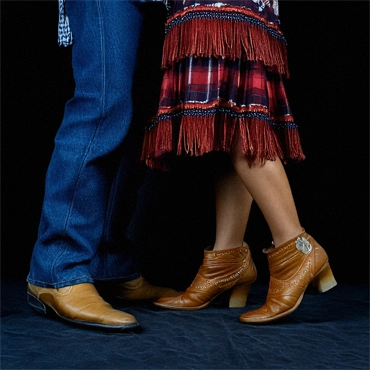
The last five decades have seen a steady rise in the fans of Country Western music and dancing. Country, which was once enjoyed only in small “Honky Tonks”, has evolved into one of America’s favorite musical genres. The Arthur Murray® Dance Studios have always been the leaders in dance instruction and with our Country Western curriculum, we continue the tradition of helping people feel at ease in any dancing opportunity that presents itself.
Today Country Western music encompasses a wide variety of tempos and rhythms. This planning and progress chart presents dance material that will satisfy all of your Country Western Dancing needs; be it social dancing with a special partner or something a little more showy and polished; this material will get your boots moving – guaranteed.
With the popularity of Country Western music and dance, Arthur Murray® has developed this curriculum to help meet the increasing demand for high quality instruction in this fun and exciting style of dance. This Country Western syllabus will enable you to dance comfortably to a variety of music and feel at ease on the floor with any partner. The Arthur Murray® system of instruction is time tested. And Country Western dancing will make learning quick, fun & easy.
Argentine Tango
Argentine tango is a passionate, improvisational social dance originating in late 19th-century Buenos Aires, characterized by a close embrace, intimate connection, and intense, “walking” movements. It focuses on improvised communication between partners, often danced in milongas, with music driven by the bandoneón. Key elements include the salida (basic exit), walking, and, for more advanced dancers, ochos (figure-eight steps).
History:
The Argentine Tango has a rich history from the lives and music of Buenos Aires. As immigrants from Europe and Africa came to Buenos Aires in the 1880’s, they began dancing in the dark lit cafes to tell the story of the male-female relationship. The dance spread to Paris, along with its music, which included an accordion like instrument, and became popular across Europe. With the popularity in Europe, the Argentinean upper-class decided to incorporate it into their circles. In 1926, Hollywood capitalized on the popularity of the Tango and used it in a movie “The Four Horsemen of the Apocalypse” with actor Rudolph Valentino creating the craze for the dance which is still alive today.
Characteristics:
Argentine Tango is danced using an embrace. The embrace position has the dancers’ chests closer together than their hips and often has both the leader and the follower in complete contact dancing cheek to cheek. However, the embrace is not rigid, but relaxed, so that all figures can be danced comfortably. The Argentine Tango is a dance full of emotion and is often dictated by the highlights in the music.
Lindy Hop
History:
Originally named by Ray Bolger after Colonel Lindbergh’s historic first flight across the Atlantic, this popular Swing style had as much “getting into the air” as possible. The more acrobatic versions were limited to ballrooms, of which the most famous was New York’s Savoy Ballroom in Harlem. Popular musical groups of today have revived interest in the musical styles from the original Lindy Hop era and have fired the imagination and enthusiasm for a whole new generation of Lindy Hop dancers. The acrobatic style used for exhibitions and competition is not necessary for today’s good dancers to enjoy this perennial favorite. The rhythmic patterns take place over two measures of music and can be danced to a variety of musical interpretations. Related dances are the Charleston, Black Bottom, Shag, Jitterbug and more recently East Coast Swing and West Coast Swing. Many Lindy Hop patterns are used in other Swing Styles to add variety or provide a change of pace.
Music:
Lindy Hop, Swing, Jitterbug, etc are normally written in 2/4 or 4/4 time with the musical accents occurring on the second or second and fourth beats of a measure. Lindy Hop has a general rhythm of 1, 2, 3 & 4, 5, 6, 7 & 8 or it’s equivalent. Lindy Hop may be danced comfortably over a wide range of tempos. Swing artists include: Benny Goodman, Squirrel Nut Zippers, Louis Jordan, The Flying Neutrinos, Big Bad VooDoo Daddy, Flipped Fedoras
Characteristics:
Usually danced to faster swing music, Lindy Hop is danced with kicks and flicks of the foot. The more energetic, acrobatic dancers may add “airsteps” to their dancing which were first created in 1935 by a young dancer named Frankie “Musclehead” Manning.
West Coast Swing
Differing from the high-energy, highly-rotational, and bouncy East Coast Swing, the West Coast Swing is a slinky slot-style dance. While music for this style can vary greatly, it is traditionally danced to rock ‘n roll in more of a Blues style. The West Coast Swing is great for learning connections, improvisation, and musical expression.
History:
In the 1940’s with the wild abandonment of the Jitterbug being banned from dance halls due to many venues, Arthur Murray developed and documented several swing steps that he later called “Sophisticated Swing.” This was the beginning of what is now called West Coast Swing. Arthur Murray is credited with the first codifications of West Coast Swing and used such names as “Under Arm Pass, The Whip and The Sugar Push” to describe the patterns. The ladies taking “two walking steps forward” towards the man at the beginning of each pattern was standardized in his studios. In 1989, California selected the West Coast Swing as its state dance. Today there are over 5,000 documented West Coast Swing step patterns and more are added every year.
Music:
West Coast Swing can be danced to almost any music written in 4/4 time, from the Blues to Disco, Jazz, Pop, Country or Big Band. It is considered a “living dance” in that it is constantly evolving, growing and changing to the music styles currently in vogue.
Characteristics:
The West Coast Swing differs from other swing dances because of its distinctive “dancing in a slot” approach, where the lady’s movement takes her towards the man, not away, such as in a Rock step.
West Coast Swing Songs & Artists Include:
Addicted to Love – Robert Palmer, All Shook Up – Elvis Presley, Brown Sugar – Rolling Stones, Chain of Fools – Aretha Franklin, Fever – Peggy Lee